Dunderflisan – Sounding the Unseen (Åland, 2025-2026)

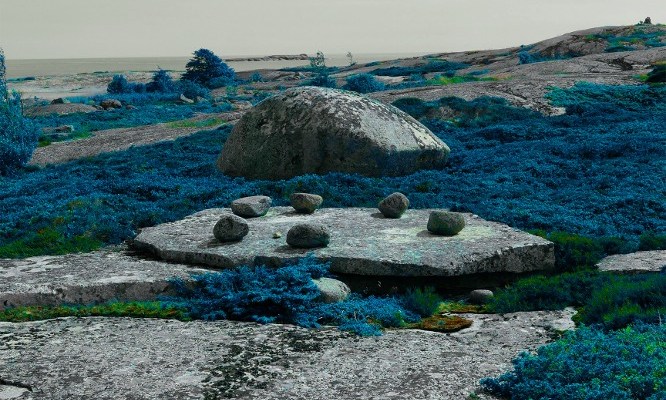
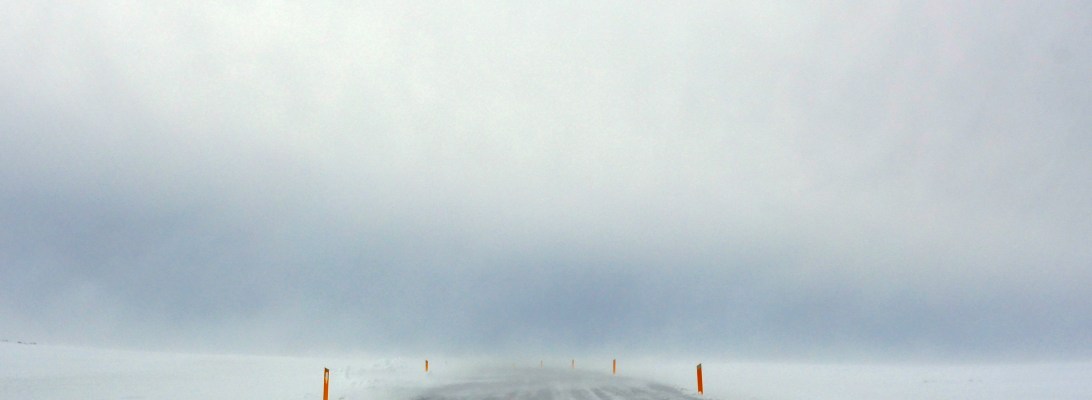
An ongoing sound art research project – in collaboration with theologian and dance researcher Laura Hellsten – exploring the acoustic, mythological, and ecological dimensions of dunderflisan—thunder-stones found along the Åland archipelago, with a primary focus on the remote site of Östra Mörskär. Historically believed to emit sound and act as fog beacons, these stones occupy a liminal position in Ålandic life, where navigation, weather lore, and cosmology converge. The project investigates how these stones resonate—materially, culturally, and imaginatively—within the island landscape.

Through field recordings, interviews with local inhabitants, and archival research, the work traces how dunderflisan have functioned as both practical markers and mythic agents. In oral traditions, the stones are said to “speak” during fog or atmospheric shifts, guiding seafarers and signalling unseen forces. This blend of sensory perception and folklore forms the project’s core inquiry: how sound mediates human–environment relations, and how mythic structures persist within contemporary ecological awareness.

The artistic component unfolds as a site-responsive sound installation developed in dialogue with the landscape itself. Using low-frequency transducers, resonant materials, and processed field recordings, the installation seeks to transpose the imagined and remembered sonic presence of dunderflisan into a sculptural acoustic form. Rather than a single fixed presentation, the installation evolves through iterative experiments in situ—on coastal rocks, in abandoned structures, or within boats on land—allowing the environment to shape its tonal and spatial qualities.

By reactivating the sonic imagination surrounding dunderflisan, the project invites new forms of listening to the Åland landscape, foregrounding the entanglement of myth, memory, and ecological perception.
Changed and Changing – A Participatory Soundtracking of the Site (Montréal, 2025)

Facilitators: Elee Kraljii Gardiner and Eduardo Abrantes

Performers: Elee Kraljii Gardiner, Eduardo Abrantes, Olya Zikrata, Polina Shubina

Changed and Changing: A Participatory Soundtracking of the Site is a collaborative workshop that invites participants to collectively compose a soundtrack for a video adaptation of Gardiner’s ecopoem “Changed and Changing,” a text shaped by processes of decay, exposure, and environmental transformation. Developed as part of an ongoing artistic partnership between Gardiner and Abrantes—initiated in Berlin in 2024—the project investigates the performative and ecological potential of sound-poetry.

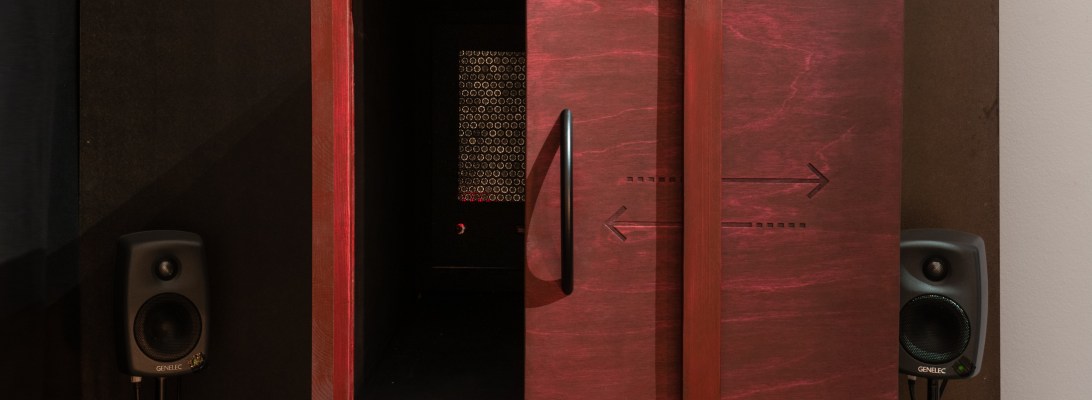
For this Montréal iteration, the black-box space at Concordia University becomes a temporary sound studio. The video is first screened with only partial audio, leaving room for participants to inhabit and reshape its sonic field. Through multiple takes, the audience records overlapping soundtracks, experimenting with how voice, noise, rhythm, and gesture can “synch” with the visual environment to propose new ways of sensing and weathering the climate crisis.

The session includes an open discussion on collective authorship, the ethics of shared sonic production, and the idea of “being in flow” within the Anthropocene. By foregrounding bodies in shared space and the co-creation of sound and image, the workshop cultivates a form of radical, situated listening—an artistic ecology unfolding in real time, attentive to change, vulnerability, and the possibilities of collective attunement.

To Swim the Poem & Even If We Never Figure Out What Happened (FLATEYRI, REYKJAVIK, 2025)

Two interconnected works born from the ongoing collaboration between sound artist Eduardo Abrantes and Canadian poet laureate Elee Gardiner. Together, the pieces explore how language, voice, and embodied listening can create porous spaces where memory, sensation, and narrative drift into one another.

Both works begin from Gardiner’s poetic practice, which moves fluidly between the intimate and the elemental, and from Abrantes’s interest in sound as a medium that unsettles fixed meanings. Their collaboration treats poetry not as text to be illustrated, but as a living material—something that breathes, resonates, and transforms when carried into the acoustic realm.

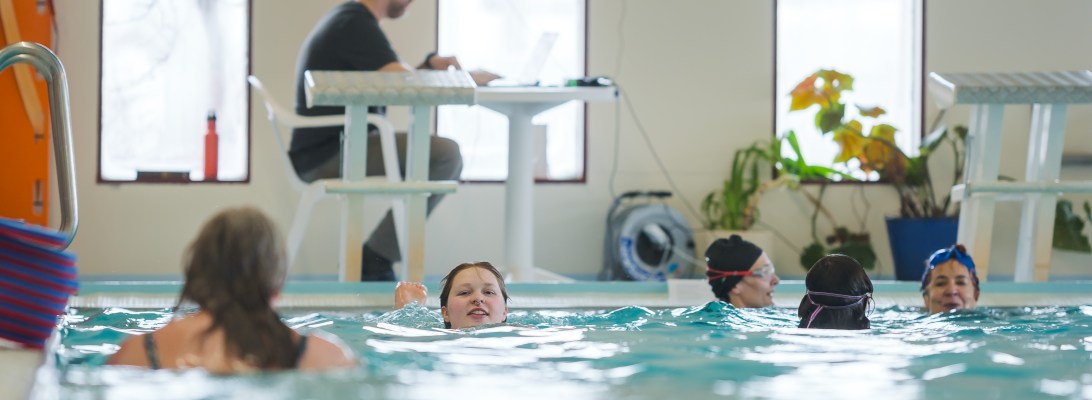
To Swim the Poem immerses the listener in a sonic environment where Gardiner’s words are stretched, submerged, and refracted. Through layered vocal textures, underwater recordings, and shifting spatial acoustics, the piece evokes the sensation of moving through a poem as one moves through water—buoyant, disoriented, and held by currents of language.

Even If We Never Figure Out What Happened approaches voice as a fragile trace of experience. Fragmented phrases, breaths, and resonant tones form a sonic archaeology of emotion, inviting listeners to inhabit the spaces between what is said and what remains unsaid. The work lingers in uncertainty, embracing the poetic potential of not knowing.

Together, these two pieces form a shared inquiry into how sound and poetry can co-compose states of attention, vulnerability, and embodied meaning—an exploration of listening as a way of being with another’s voice.

Bodyworking the soundworld – collective strategies for immersive sonic experience (SEVERAL LOCATIONS, 2021-2022)

Bodyworking the soundworld is a collective exploration of the extended embodiment of our presences in acoustic space. It is about the play of resonance, the dynamics of call and response, the mutual engagement through movement, micro and macro-rhythms and utterance patterns. It is negotiated through improvisation in real-time, so that although I provide a few performative guidelines, the goal is a flat structure towards immersion and shared ownership. It is meant as an evolving and generative (echo)system.

As a sound artist I usually work with technological interfaces, as simple as a recorder and a microphone, or as complex as editing, processing, streaming, coding, and spatial design. Yet, what propels my practice is the constantly evolving sonic experience of bodily navigating the soundworld, and this requires no tech at all. It is grounded on aurally-driven proprioception and extended collective kinaesthesia – on bodies in motion, on listening to spaces and to each other, on a performative playful of way of interacting with and through sound.

This piece has been deployed as a performative-workshop in different locations, usually in an academic setting, like a an international conference or a seminar, often in the field of ecological humanities, where it is meant to propose a contrast to the more strict knowledge performance approaches accepted at these environments.

At the 15th NOFOD (Nordic Forum for Dance Research) Conference: Moving, relating, commanding. Choreographies for bodies, identities and ecologies. The Danish National School of Performing Arts in Copenhagen, July 2022.
At the Nordic Summer University (NSU) gathering in Oslo, August 2022.

GUT AND PSYCHE – A CLOSE LISTENING / Tarme og Psyke – En Nærlytning (COPENHAGEN, 2021)

Tine Friis og Eduardo Abrantes
2021
Lydinstallation
Bygget af Aloh Studio & Jonas Linnet / Stemme: Mathilde Eusebius 
Foto: David Stjernholm

[DA] Dette værk tager udgangspunkt i et forskningsprojekt, hvor personer med interesse i sammenhængen mellem tarm og psyke gik sammen om at udføre et såkaldt “erindringsarbejde” – en gruppebaseret arbejdsform, hvor deltagerne skriver tekster om konkrete minder, som de derefter læser og diskuterer. Historierne, der indgår i værket, er baseret på deltagernes tekster og samtaler. Deltagerne skrev ud fra emnet “En gang, hvor mine tarme og min psyke snakkede sammen”.

Resultatet var et nærfelts spatialiseret 4-kanals lydlandskab, som lytterne kunne træde ind i uden at krydse nogen fysiske grænser. Inden for dette lydlandskab er de nedsænket i pulser, lag og iscenesatte fortællinger, der engagerer sig med de mange agenturer, der er i spil inden for deres egne kroppe.

Dette værk blev bestilt til udstillingen “The World is in You” (Medical Museion / Kunsthal Charlottenborg, 2021-2022), en stor international samarbejde. “Ved at blande videnskab, samtidskunst og historiske genstande, udforsker udstillingen, hvordan vores kroppe er forbundet med verden i og omkring os.”

Tine Friis og Eduardo Abrantes
2021
Sound installation
Built by Aloh Studio & Jonas Linnet / Voice: Mathilde Eusebius
Photo credit: David Stjernholm

[EN] This work builds on a research project in which participants interested in the connection between gut and psyche came together to do “memory work” – a group-based method in which the participants write short texts about specific memories, which they then read and discuss together. The stories in this work are taken from those texts and conversations. The texts proceeded from the prompt, “One time my gut and psyche spoke to each other”.

The result was a near-field spatialized 4-channel soundscape that listeners could step into without crossing any physical borders. Within this soundscape, they are immersed in pulses, layers, and enacted narratives, engaging with multiple agencies at play within their own bodies.

This work was commissioned for the The World is in You exhibition (Medical Museion / Kunsthal Charlottenborg, 2021-2022), a large scale international collaboration “blending science, contemporary art and historical objects, the exhibition explores how our bodies are connected to the world in and around us.”

HETEROPHONICS (Vilnius, Lithuania, 2019)

Heterophonics was a lecture-performance and sound installation for two FM radios and short-distance radio emitters presented at the Departures, Deviations and Elsewheres Artistic Research Symposium, at the European Humanities University, Vilnius, Lithuania, in March 2019.

Heterophonics – radio as an intersection of displacement and site-specificity

As a young child, even before having my own room in my parent’s home, I was struck by how the experience of listening to radio was radically defined by in-between-ness, and activated by an intense and slightly disorienting curiosity towards otherness, all while powerfully intersecting displacement and site-specificity. Moreover, a battery-operated FM/AM pocket radio with a wire antenna (the kind I had), if paired with headphones, can provide a magical blanket of privacy in relation to one’s immediate surroundings, while providing access to farther worlds of sonic imagination.

Of course, at the time these were not the words I had available to formulate my experience. What I was was fascinated by how voices and music from the beyond could come and reach my ears, as I lay under the (no-longer metaphorical) blankets in early nightfall, just before drifting into sleep. And without wires! The world was much less wireless back then.

Most fascinating for me, was the foreign radio coming from beyond the borders. Even beyond the exoticism of unfamiliar vocal geographies, the very act of tuning manually – meaning, traversing the static noise between station frequencies – provides access to a transitive soundscape of glitched/cacophonic heterotopia, stimulated by a phenomenology of expectation.

Heterophonics is a lecture-performance on the multiple and often incongruous overlapping of imaginary geographies that listening to radio provides. It also deals with how the located body – the listener, wherever she is to be found – is a fully active participant in this heterotopian space, and some notes on the phenomenology and politics of inhabiting it. In sum, this lecture explores traditional radio as a portable heterotopian grid/access point, as well as its nuanced variations in our present age of constant (dis)connectivity.