HYS (Gnesta, Sweden, 2017)


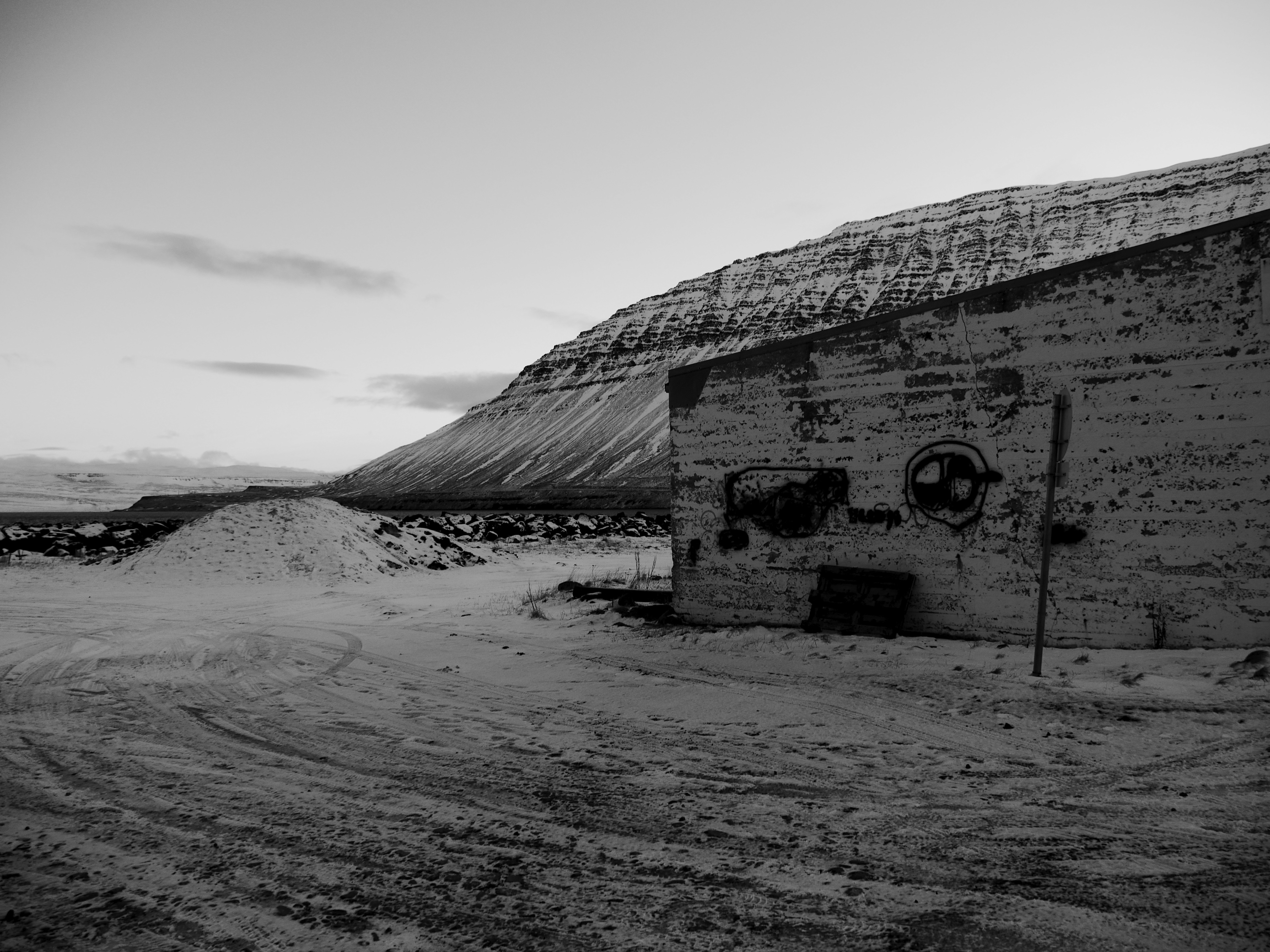
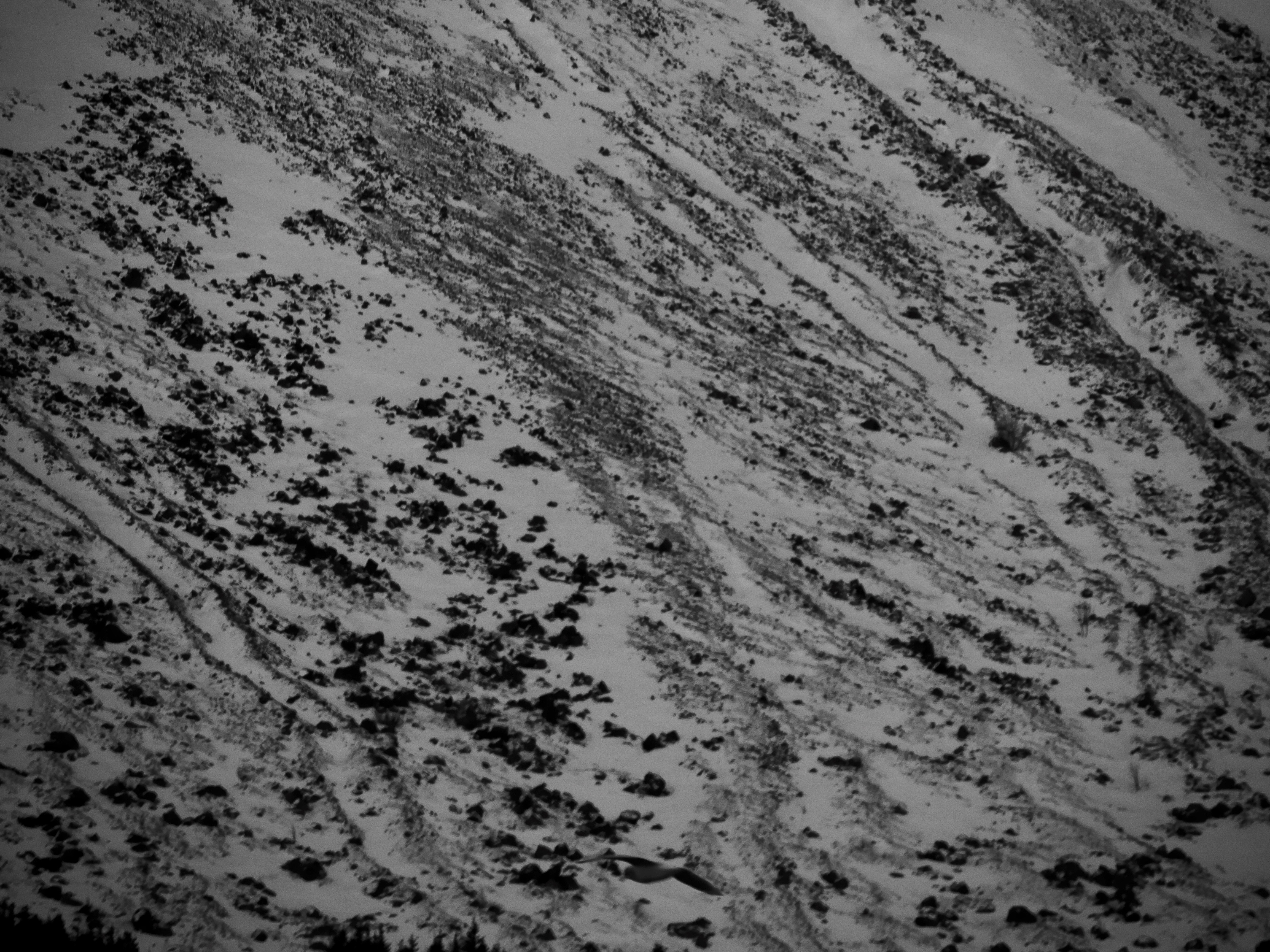
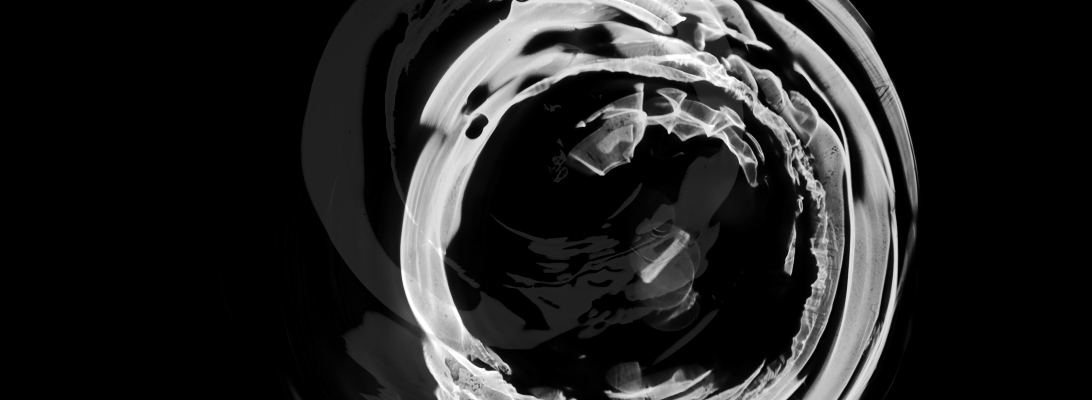
A word written on a wall in an old brewery, in a small town in Sweden. A long re-sampled soundscape reaching for the 10 bpm un-lifelike rhythm offered to bodies of abandon. Vocal intimacy as undertow, the slowing down of the “impact of lighted bodies” in Mina Loy’s words. Slow but not tame, percussive but not uplifting. Maybe.

(Photo credit: Eduardo Abrantes, Berlin 2017)

BACK TO WORK / CITIES AND MEMORY (Copenhagen, Denmark – London, UK, 2017)

A sound collage dealing with mysticism, utopian desire, and resistance, both for and against change. It includes manipulated samples of composer and Christian mystic Hildegard of Bingen’s (1098-1179) choral piece Canticles of Ecstasy, fragments of an original field recording in London at the G20 rallies, and a sample and slightly pitched detail of a voice of dissent, ironically protesting against protest. Back To Work is about raising one’s voice, about the utopian mindset that often runs parallel to activism as its mystical counterpart, it is about a gathering of voices as a sonic ritual and the joy, melancholy, and weirdness of it all.

It was created as part of the call for field-recording re-apropriation and reconfiguration Protest & Politics, a global sound map of protest that is part of Cities and Memory, a collaborative “global field recording & sound art work that presents both the present reality of a place, but also its imagined, alternative counterpart – remixing the world, one sound at at time”.

Back To Work, among others, was programmed and broadcasted for the first time on August 7th 2017 by London-based Resonance FM.


CHRONOS FOR KAIROS (Copenhagen, Denmark, 2017)

Preparatory resonant sketch for The Here And Now – the continuation of a poetic self to be manifested collectively as teaching staff of the upcoming immersive performative project Sisters Academy – Boarding School at Den Frie Udstillingsbygning (København, DK) in the fall of 2017.

:: :: ::

40 beats per minute is a common enough heart rate when asleep. A little low but still normal, especially for a trained though exhausted body. The living heart is in constant motion, not exactly translating and rotating like a planet does, but close enough. This measure can be measured as a rhythmic repetition in sequential time. 

The ancient Greeks had two names for time. Chronos refers to measurable time, from past to future, the numbering of the days, a line, a sequence. Kairos refers to the instant, the moment of opportunity where action ignites consequence and change happens. If that moment is seized. If not, it belongs to chronos, the cannibal. 

Kairos also refers to the moment in archery when the tension of the bow achieves the maximum and the arrow is released. Or in weaving, when the wooden shuttle passes between the threads tied taut in the loom.

The Here And Now is of kairos but entangled in chronos. Aren’t we all?

HORN ERU BEYGJUR / CORNERS ARE CURVES (that is why we walk into them) (Ísafjörður, Iceland, 2017)

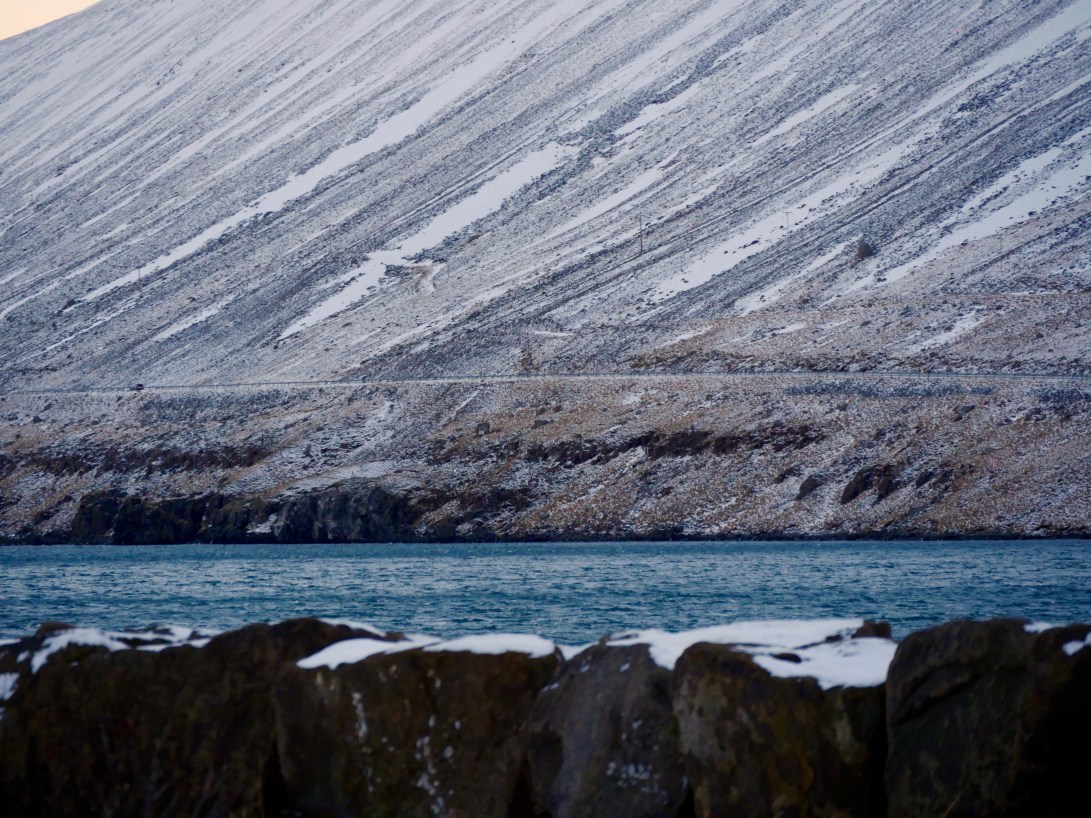
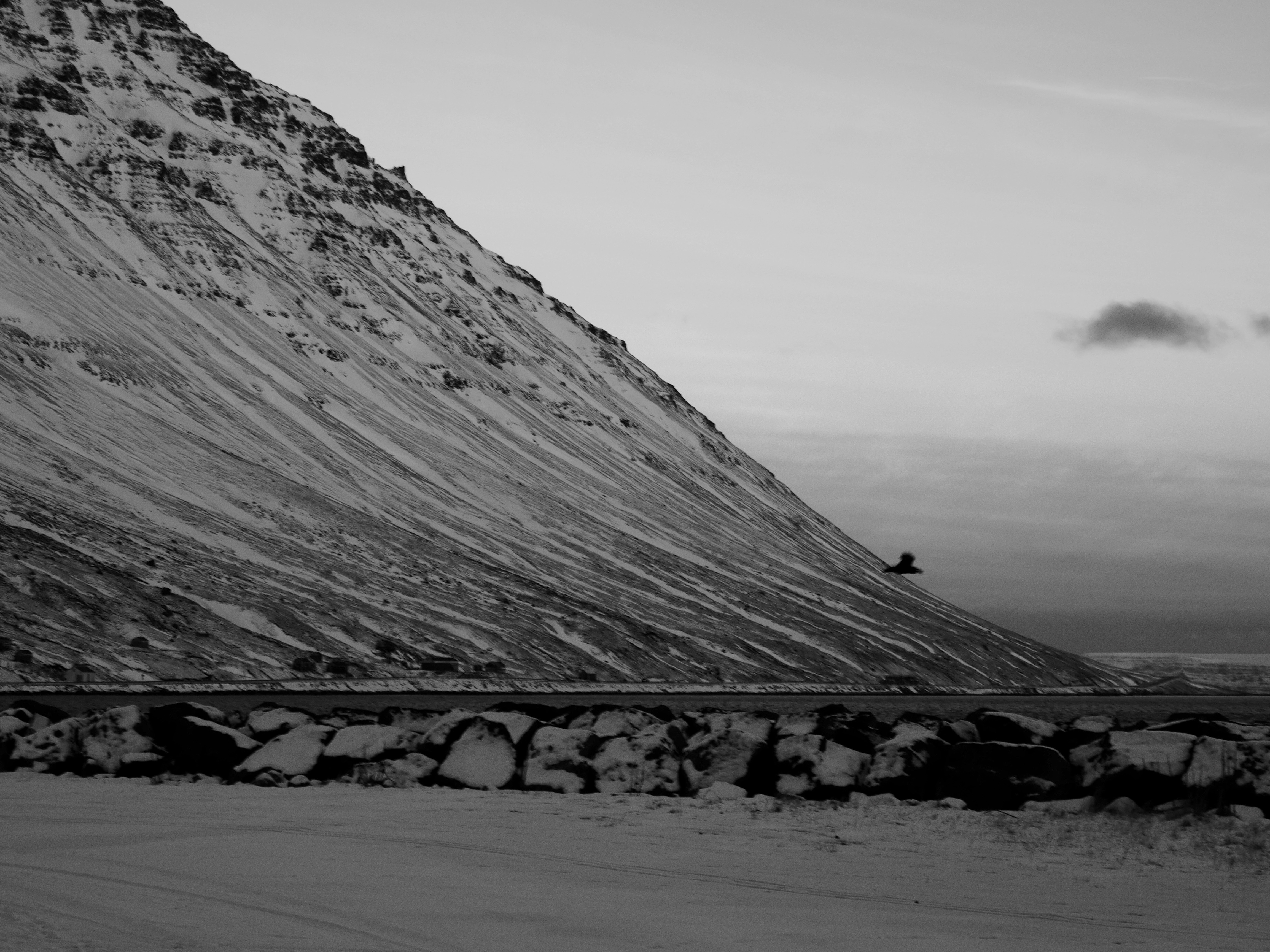
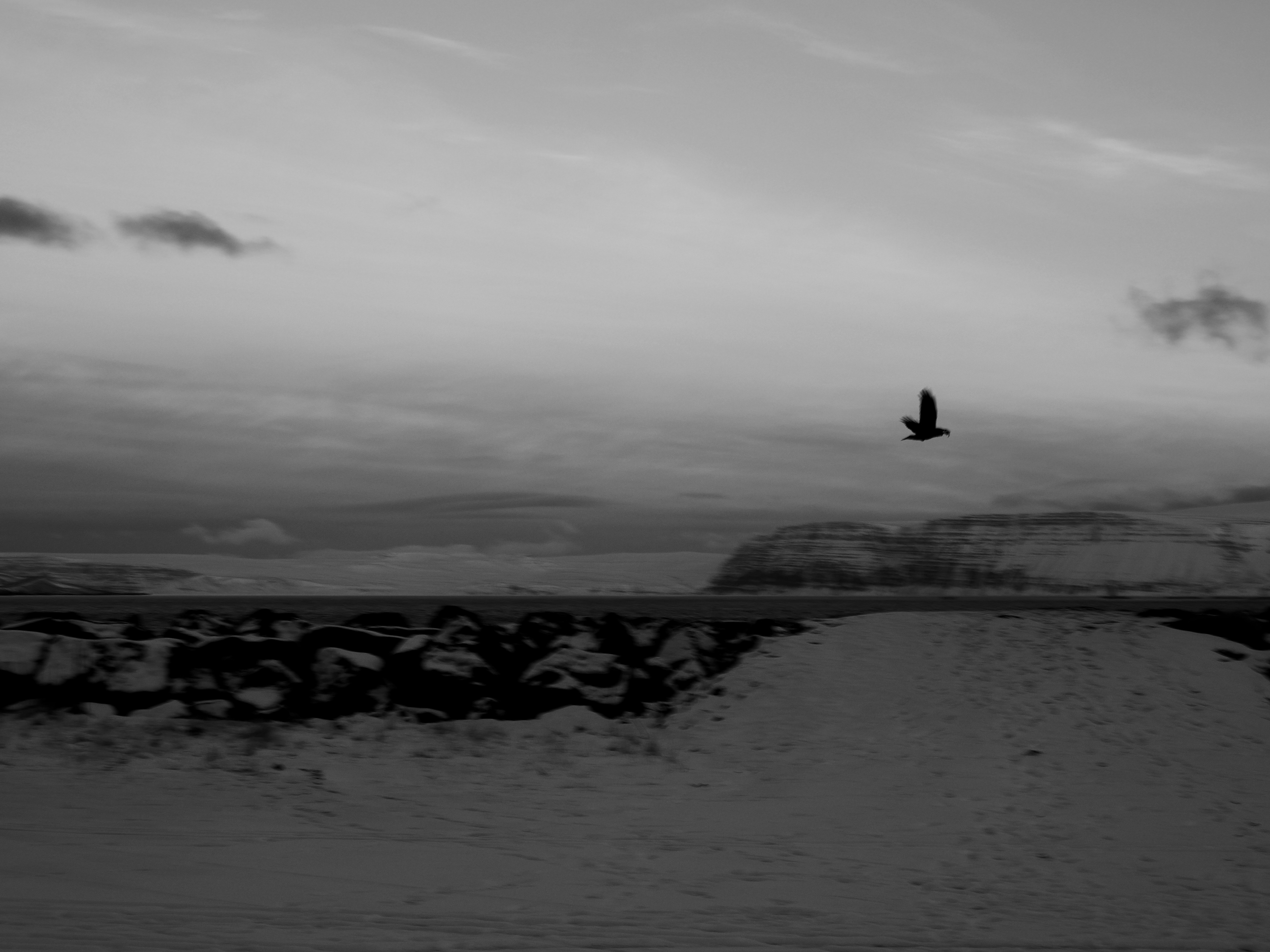
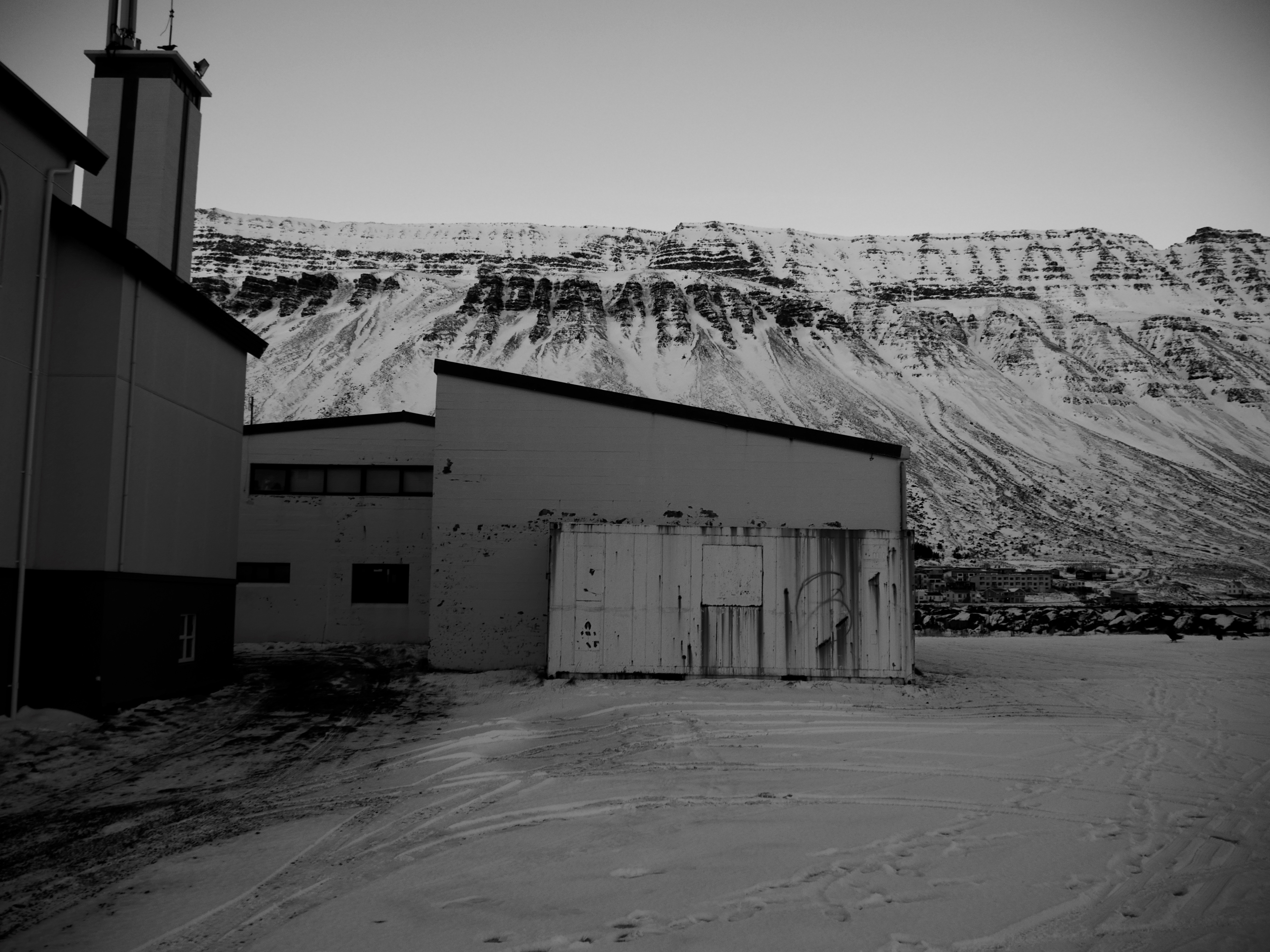
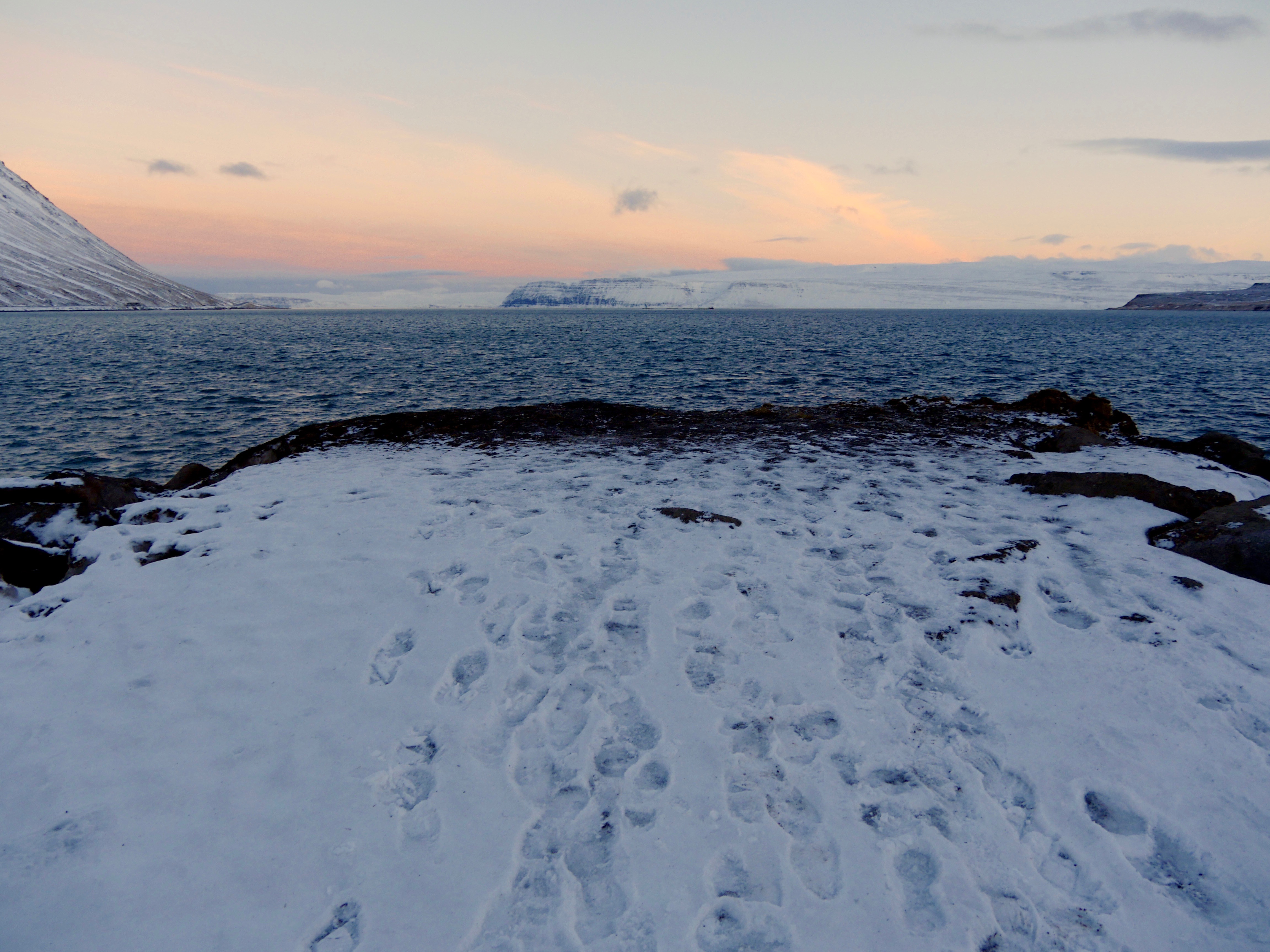
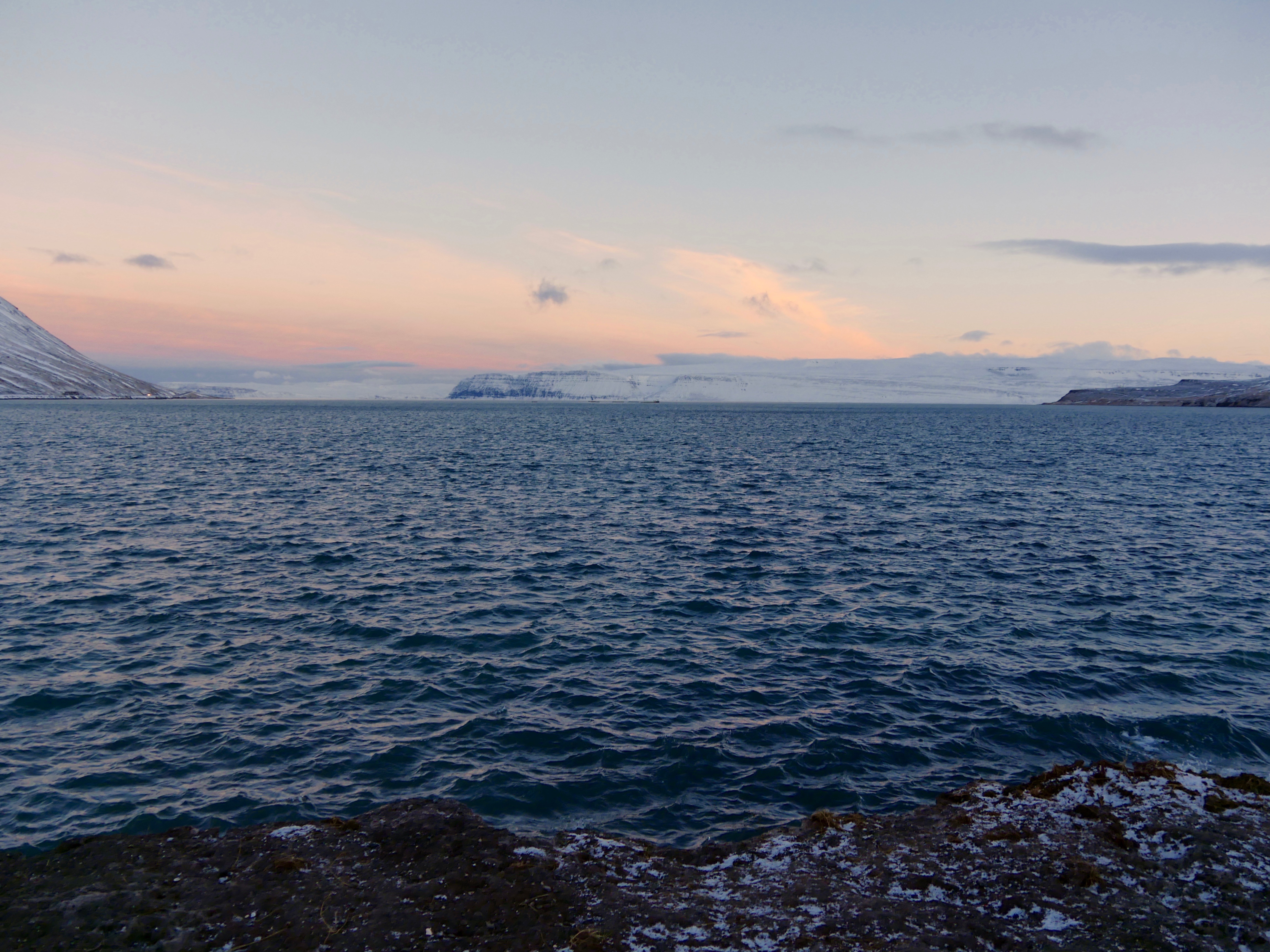
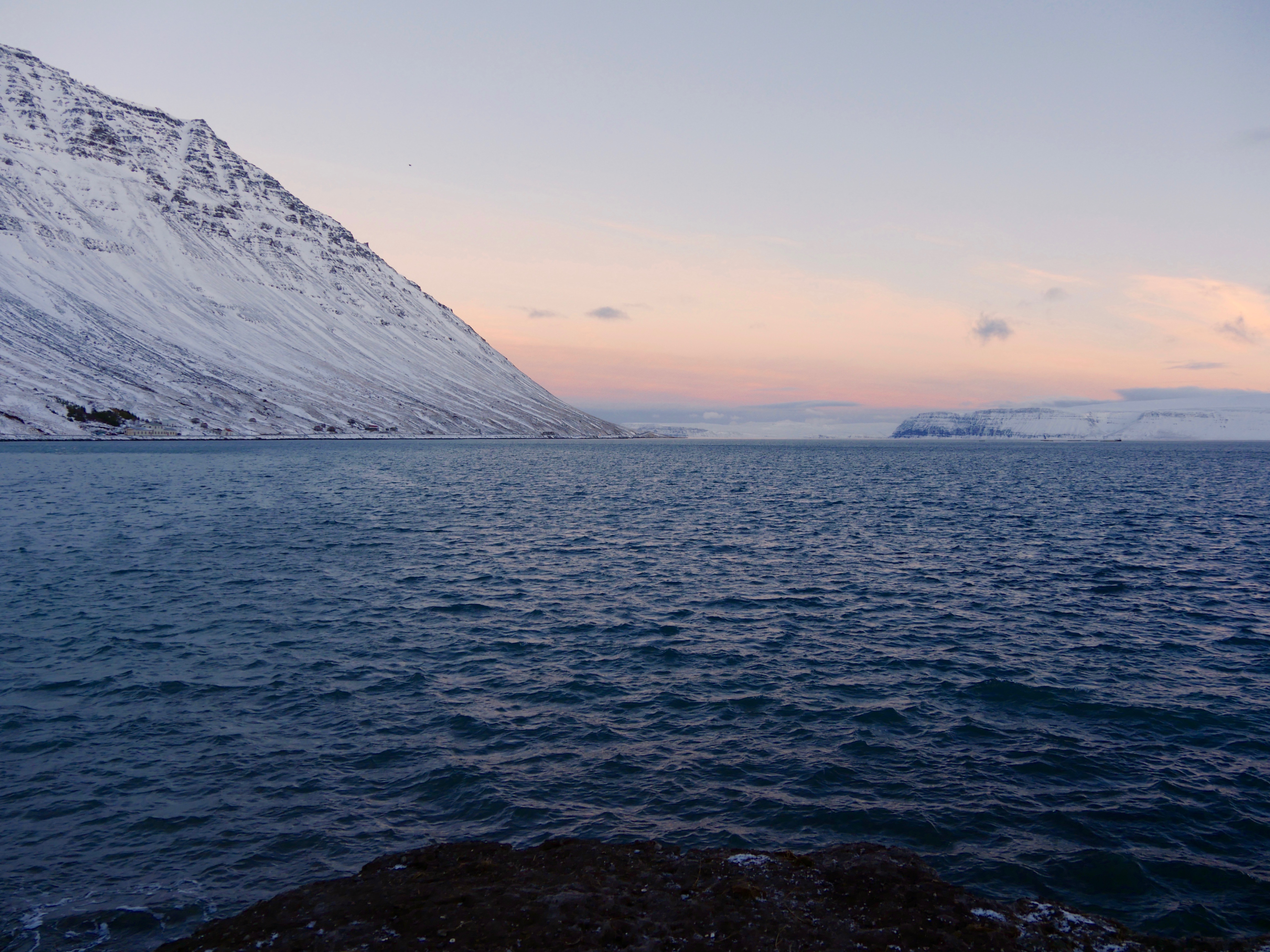
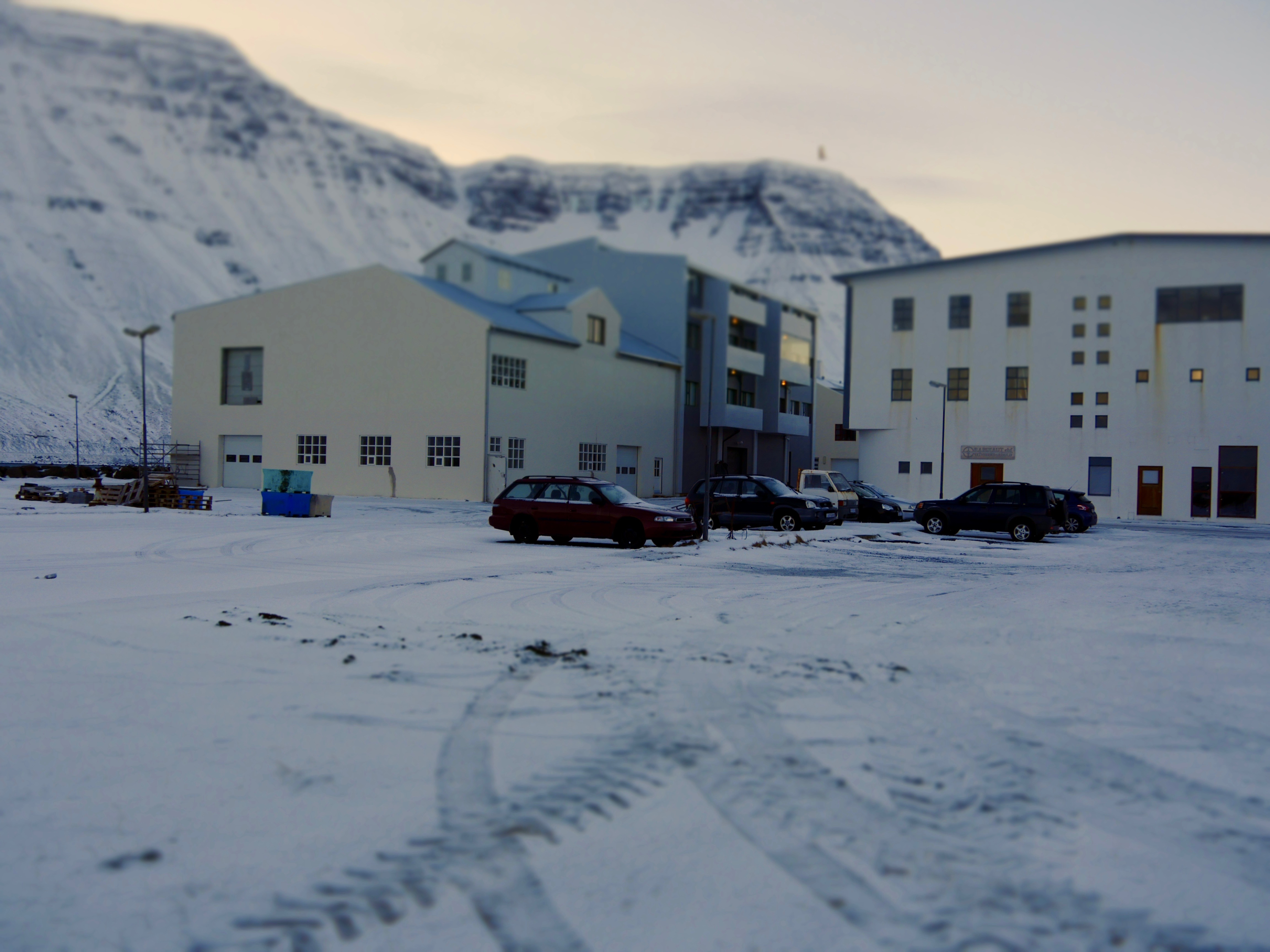
My month-long residency at ArtsIceland in Ísafjörður, during February 2017, manifested as a series of inspiring sonic encounters. Between the surrounding landscape – both monumental and fluid – and its people, I was allowed to weave my own life rhythms, being guided, welcomed, playfully challenged, and above all, engaged and engaging with full curiosity.

HORN ERU BEYGJUR / CORNERS ARE CURVES is a surround installation/sound composition that knits together some of these sonic encounters. It is composed of manipulated field recordings taken in different environments in Ísafjörður, both private and public spaces, including that strangely simultaneously public and intensely private space, the acoustic of the fjord landscape itself.

The sound collecting and composition process was guided by the awareness of the site-specific acoustic properties of the area, together with intense dialogue and shared experiences with some of the local inhabitants. It was presented as a live mixed quadraphonic (4 channel surround) sound installation at Edinborgarhúsið Cultural Centre, followed by a group walk and an improvised choral encounter at Gallery Outvert.

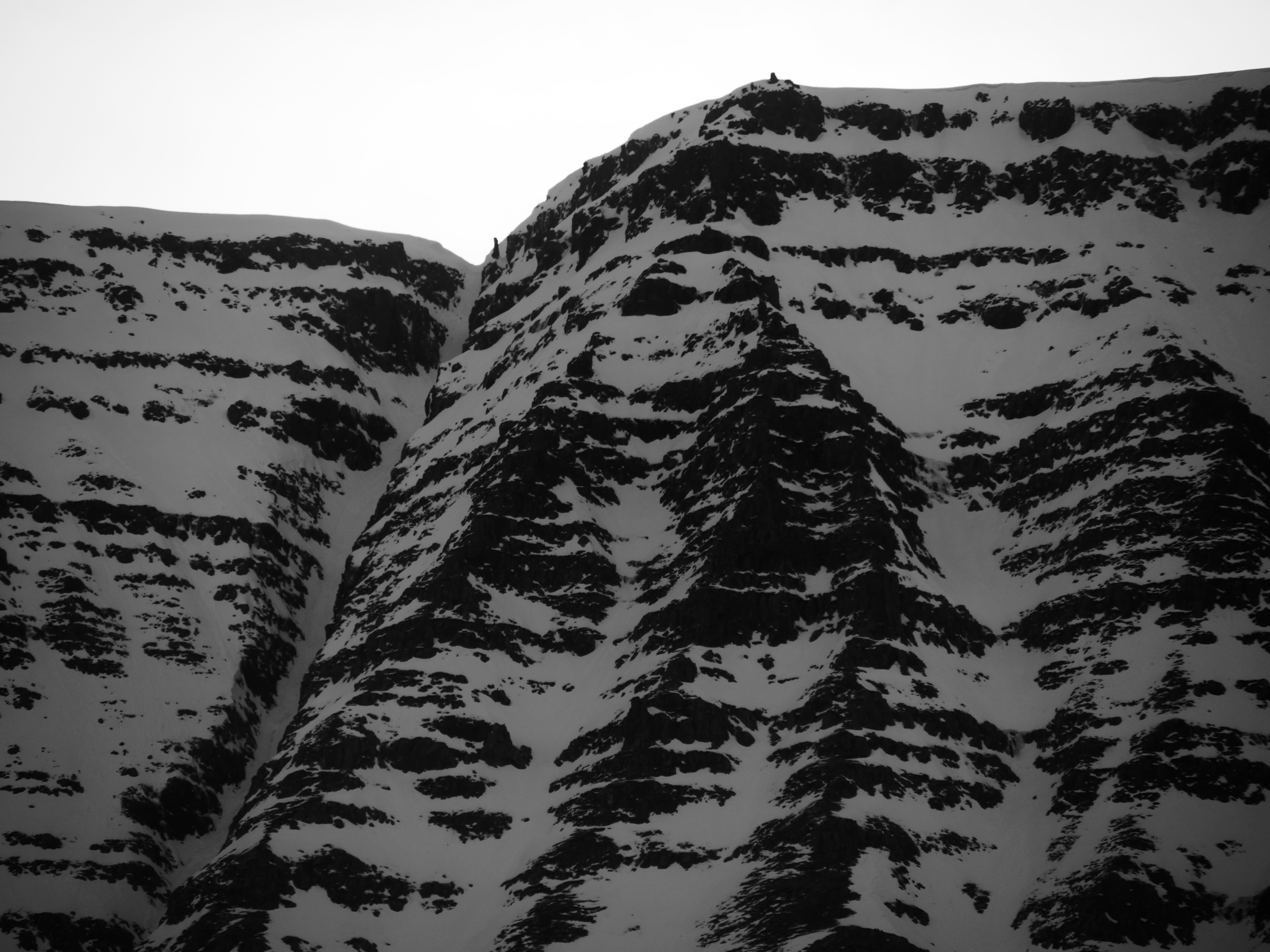
The title refers to the geography of the fjords, its corners turning into curves, its play of seemingly both challenging and inviting navigation – hard on the body and freeing in the soul. It refers also to my own shared internal landscape as a human, how past and present struggles strengthen conviction, how life and wonder shun straight lines.

This residency was made possible by financial support from the following institutions:

KON_swed_arts_grants_committee_stor_150dpi.jpg
mobility_programme_horizontal-1 kopi

TIL VANDKANTEN (Fanø, Denmark, 2016)

Til Vandkanten is a short audio-visual piece filmed at a beach stretch (Høne) in the south of the Fanø island, Denmark, in July 2016. From a fixed panoramic perspective, a group of performers/artists  – Maj Horn, Annette Skov, Carola Skov Hilby, Karla Skov Petersen, Malakias Liebmann, Stine Nielsen, and Simon Voigt – walks towards the edge of the water line to meet the horizon and then return. Their bodies, moving in a diagonal across the landscape, play with the notions of relatable scale, unreachable lines of reference, and embodiment of the landscape.

Til Vandkanten was both documentation and an artistic research experiment, produced in the context of Laboratorium for Vadehavets Ånd (Laboratorium for the Wadden Sea spirit), a project by Danish artist Maj Horn (DK), which consisted in a year of research about the spirit and atmosphere of the Wadden Sea, culminating in a research / exhibition platform at the ship Rebekka

It featured artistic contributions by artists Annette Skov (DK), Hartmut Stockter (DE/DK), Malakias Liebmann (DK), Peter Vadim (DK), Stine Nielsen (DK), philosopher Carsten Friberg (DK) and the musicians Simon Voigt (DE/DK), Stine Benjaminsen (DK) and Henriette Løvdal (DK).

OS TRÊS INIMIGOS DA ALMA (Viseu, Portugal – Stockholm, Sweden, 2016)

In one of the verses of a religious hymn from her childhood, Maria de Adelaide de Oliveira Rouxinol cautions against “the three enemies of the soul”, without explicitly naming them. According to christian tradition these would be the world, the flesh and the devil (mundus, caro, et diabolus).
If the soul is indeed intangible yet omnipresent, the same can be said of the listening experience. If there is a sonorous soul, what would its three enemies be? Distraction, unawareness, lack of empathy with the vibration of a place? I do not know.
Departing from the field-recording archive Viseu Rural 2.0Os Três Inimigos da Alma (The Three Enemies of the Soul)” is an exploration of the rhythmic dissonance implicit in fragments of the soundscape of the rural area of Viseu, Portugal. Attentive to where and when boredom gives way to beauty and vice-versa, this piece is composed in relation to distance and absence – my listening point – and the ways in which imagination tries to access a non-visited site.

(photo credit: Eduardo Abrantes)

THE HERE AND NOW AGAIN (Reykjavík, Iceland, 2016)

An immersive performance collaborative experiment, investigating strategies for sensuous embodiment in artistic and pedagogical processes. The Here And Now Again was the continuation of my poetic self manifestation, in a continued artistic research engagement with the Sisters Academy, this time an takeover intervention taking place at the Reykjavík School of Visual Arts, during a two week period in October 2016. Apart from co-authoring the transformation of the space, my participation consisted of a series of one-to-one performative encounters with students and staff, exploring improvised compositional techniques, rhythm pattern awareness, and shared sensorial expansion.

(photo credit: Eduardo Abrantes)

mobility_programme_horizontal-1 kopi

TRAVESSIAS E ENCONTROS – SUSANA ESCUTA EDUARDO DEPOIS EDUARDO ESCUTA SUSANA (Lisboa, Portugal – Copenhagen, Denmark, 2016)

A collaborative exploration on distance, audio correspondence and psycho-geographic mapping, together with artist and researcher Susana Mouzinho (PT). In Travessias e Encontros (Crossings & Encounters) – a sound piece commissioned by the interdisciplinary online platform ESC:ALA, the full curated piece being accessible here – Susana listens to a Copenhagen that Eduardo has cycled through, then Eduardo listens to Lisbon as it has been walked by Susana. A hybrid sound map results from this mutual curiosity, every now and then intersected by short voiced introspections. A dialogue with distance.

(photo credit: Eduardo Abrantes)

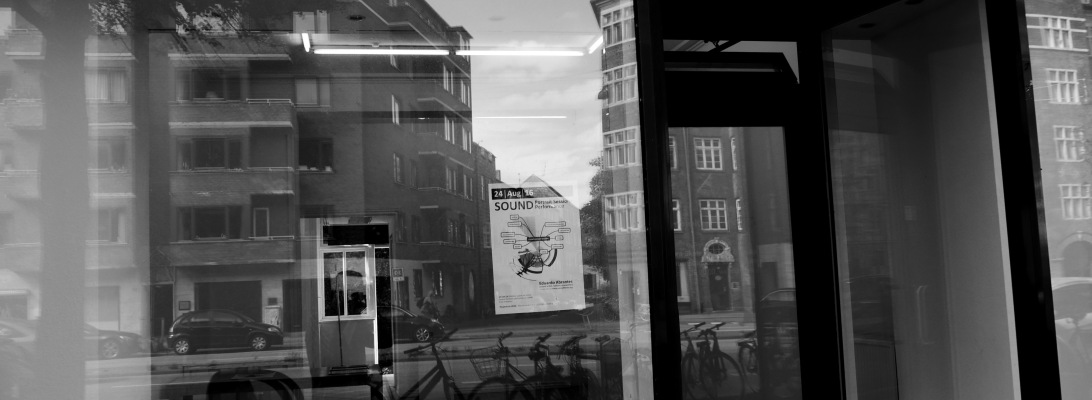
SOUND PORTRAIT SESSIONS (Copenhagen, Denmark, 2016)

Sound fascinates me in many ways. It is both tangible and immaterial – like human relationships.

It is vibration – our shaking body among other shaking bodies – it can animate the inanimate, it can be felt in the gut, in the hand flat against a wall, or barely perceived by the ear as a distant signal in the limits of space – above, below, behind and all around. It is complex as process yet immediate in our response – again, just like human relationships.

As a sound artist, one of the main driving forces in my work is the radical physicality and subtle tangibility of the sonic encounter with the other, as well as the multiplicity of the situations in which it might occur.

My practice is built around site-specificity, situation and curiosity. Therefore, it deals with the concrete circumstances where a meeting takes place; with the choreography of intentions as a collaborative aspect; with the intimacy, the awareness of the other, the awareness of the “we”, and the grasping of the unique encounter.

The Sound Portrait Sessions are seven compositions gathered from the sonic material recorded and exchanged during seven individual encounters, which took place at Projektrum Vera during June 2016. In each of these encounters – with Kamilla A., Cecilie O., Ingrid V., Johanne A., Louisa Y., Peter V., and Lucía M. – we talked, listened, hummed, breathed, walked, moved, in short, engaged with each other sonically. A list of some of our shared sound actions can be found here. The sounds collected via mono, stereo, and binaural microphones became the raw material used to create seven individual soundscapes, between 6 to 10 minutes each.

The initial idea was spun from wondering about the specific kind of encounter which is the portrait situation. One of the broadest categories of artistic production, the portrait has, over the centuries, been thoroughly re-invented, from painting through to sculpture, from photography to video-art, from performance to post-dance and beyond.

In our mind’s eye we might see the painter sitting half-hidden behind his or her easel. The model stands in front, on the other side of the canvas, in the spotlight – sitting or standing as still as can be, nude or propped with an ellaborate costume. The subject-object relationship in this ideal…

However, how could/should the setting be if a sound portrait was to be attempted. Which methods? Which situation? Which kind of encounter would this be?